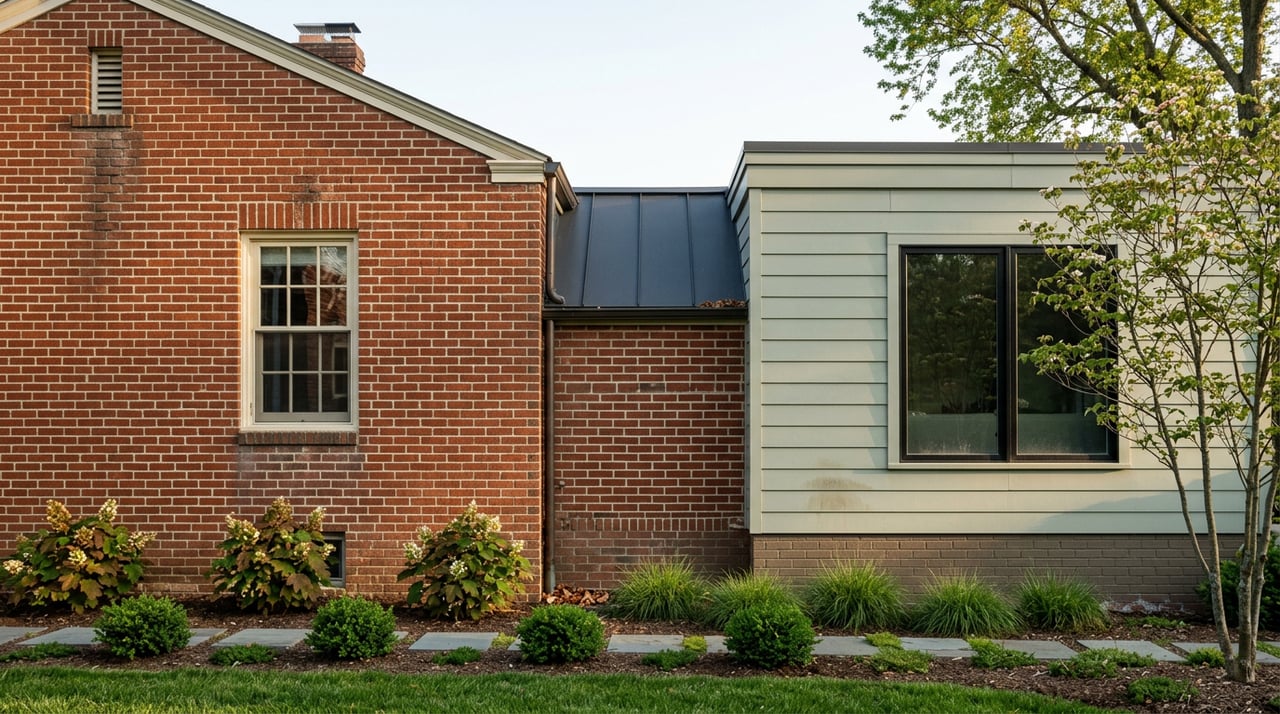
Two homeowners want to replace a window this fall. One lives on Prince Street in Old Town. The other lives six blocks away on a Rosemont street lined with houses built in the same decade.
The Old Town owner has to apply for a hearing, wait for a public notice period, and get a certificate before a contractor can touch the frame. The Rosemont owner pulls a standard building permit and schedules the work for next week.
Both houses sit inside a place the city officially calls historic. Only one of them has to ask permission to prove it.
The Difference Nobody Puts in the Listing
Rosemont's marketing has always leaned on its pedigree: laid out between 1908 and 1914 as one of Alexandria's earliest streetcar suburbs, its Craftsman bungalows and Colonial Revival houses landing it on the National Register of Historic Places. That status is real. It's also one of seven National Register districts in the city, alongside Fairlington, Old and Historic Alexandria, the George Washington Memorial Parkway corridor, Uptown/Parker-Gray, Parkfairfax, and the Town of Potomac.
What almost never makes it into a listing description is that National Register status and local design control are two separate things. According to the City of Alexandria's own preservation guidance, only two of those seven districts, Old and Historic Alexandria and Parker-Gray, are locally regulated through the city's Board of Architectural Review. Rosemont's National Register listing recognizes the neighborhood's architectural and historical significance on paper. It does not put a city board in charge of what happens to your porch.
What Local Regulation Actually Requires in Old Town
The Board of Architectural Review is a seven-member panel, two of them architects, appointed by City Council. Inside Old and Historic Alexandria and Parker-Gray, the board must approve a Certificate of Appropriateness before an owner can touch new construction or any exterior alteration visible from a public street, alley, or the river, according to the city's preservation office. A separate Permit to Demolish is required for removing more than 25 square feet of material from a structure, regardless of whether it's visible from the sidewalk.
The city will not issue a building permit on a BAR-regulated property until that certificate is in hand. Depending on the scope of work, that plays out two different ways:
- Minor projects like repainting in the same color, replacing roofing with similar material, or routine maintenance can go through administrative approval, often handled by BAR staff within days to a couple of weeks.
- Major work, additions, new construction, demolition, or significant exterior changes, requires a full public hearing. That path runs through staff review, public notification, and a formal board meeting, and typically takes about two months before a permit application can even be submitted.
The board meets the first and third Wednesday of most months. It does not meet in August, which means an Old Town owner who wants September work started needs a July application in front of the board, not a September one.
None of that applies to a Rosemont house that sits outside the locally regulated boundary.
| Old Town (OHAD / Parker-Gray) | Rosemont (National Register only) | |
|---|---|---|
| Replace exterior windows | Certificate of Appropriateness required | Standard building permit |
| Change exterior paint color | Administrative BAR approval | No BAR review |
| Build an addition | Full BAR hearing, roughly 2 months | City zoning and permit process only |
| Demolish more than 25 sq ft | Separate Permit to Demolish required | Not applicable |
| Who signs off | 7-member Board of Architectural Review | City permit office |
The One Exception Even in Rosemont
The one place this gets more nuanced is individual buildings. Alexandria's City Council can separately designate a specific structure as a "One Hundred-Year-Old Building," and once that ordinance passes, the property falls under BAR oversight regardless of which district it sits in. A handful of properties scattered outside Old Town carry that designation. It's worth checking before assuming a specific Rosemont address is automatically exempt, but it's the exception, not the rule, and it applies to individually named buildings rather than the neighborhood as a whole.
What the Market Is Already Pricing In
Alexandria's citywide median sale price gets quoted often, and it tells you almost nothing useful about any one block, because it blends West End condos, Old Town waterfront estates, and everything between into a single number. A Seward Group analysis of Bright MLS closings looked instead at 51 closed, fee-simple single-family sales in the Del Ray and Rosemont zip code between January 1 and June 18, 2026, and found both neighborhoods closing faster and closer to asking price than the city, the region, and the country as a whole over that window.
Over the trailing twelve months into mid-2026, Rosemont's median sale price ran roughly $1,225,000, up about 6 percent from the year before, with homes averaging 14 days on market against a national average closer to 53 days.
Buyers rarely say out loud that permitting friction is part of what they're paying for. But a house that offers a century of architectural pedigree, walkability to two Metro stations, and a straightforward path to renovating without a public hearing is a specific kind of asset. It reads as historic without behaving like a regulated historic district, and the closing numbers suggest the market has already noticed.
Rosemont sells the way it does because it lets buyers have the history without the hearing.
The Trade-off Worth Naming
None of this makes Old Town's system a mistake. A locally regulated district exists precisely to lock in the visual consistency that makes streets like those in OHAD and Parker-Gray so recognizable decades later, and that consistency is part of what protects long-term value for owners who bought into it. The trade is real in both directions. Old Town buyers are paying, in part, for design certainty and a streetscape that can't be altered piecemeal. Rosemont buyers are paying for character with more room to make a house their own, faster and with fewer steps.
Neither is the better answer in the abstract. It depends on whether you want to renovate on your own timeline or you want the neighborhood's appearance locked in by someone other than your neighbor's contractor.
A Few Questions Buyers Ask Once They Understand This
If Rosemont isn't locally regulated, can I do literally anything to a house there? No. Citywide zoning, setback rules, and the Board of Zoning Appeals still apply to any Alexandria property. What Rosemont skips is the Board of Architectural Review's separate design approval for exterior changes, not zoning or building code review generally.
Does National Register status get me anything as a Rosemont owner? It recognizes the neighborhood's historical significance for federal purposes and has been part of Rosemont's identity since its early-20th-century development as a streetcar suburb. It does not require you to clear exterior changes through a city design board the way OHAD or Parker-Gray does.
How do I find out if my specific address carries an individual historic designation? Ask before you assume. The city maintains records on properties designated as One Hundred-Year-Old Buildings, and an experienced local agent can help you check a specific address before you write an offer with renovation plans attached.
Where This Leaves You
If you're comparing Old Town and Rosemont on square footage and price per foot alone, you're missing the variable that actually explains why one moves faster than the other. The regulatory layer is invisible until you're the one applying for a permit, and by then it's already shaped your timeline and your budget.
If you're weighing a historic Alexandria purchase and want to know exactly what a specific address will and won't let you do before you write an offer, Christine Garner has spent decades walking these streets and these permit offices. Call Christine, talk with an Old Town neighborhood expert, and get the answer before it becomes a surprise during your renovation.
